This is the first article I’ve read that actually describes the problem properly. It was never just “not enough blood flow” for me. The firmness was different, almost like the support had weakened.
For decades, men around the world were given the exact same explanation.
If there is difficulty with erections, then the problem can only be:
This idea has been repeated so many times that it became automatic.
A man notices a change.
He seeks help.
He receives a pill.
Maybe he increases the dose.
Maybe he tries another medication.
Maybe he pretends to himself that it is just “normal for his age.”
But there is one strange detail that has started drawing attention in specialized men’s health clinics in recent years.
Many men over 45 still had testosterone within the range considered normal.
Many still felt desire.
Many could still initiate an erection.
Even so, they all described practically the same sensation.
It was not just a failure.
It was as if the organ had lost structure.
Lost firmness.
Lost support.
Some men described the sensation in almost identical words:
“It feels too soft.”
“It does not feel the same anymore.”
“It is as if it lost its internal strength.”
“It feels like rubber.”
And that last sentence began appearing so often that it gave rise to the popular name of the condition.
An uncomfortable term.
But an extremely visual one.
Because it describes exactly what many men begin to feel after a certain age: the organ still exists, it still responds partially, but it loses structural resistance.
At first, this seems like just a phase.
Then it becomes insecurity.
Then it becomes routine.
And the most curious part is that many of these men were already using Viagra, tadalafil, or other vascular stimulants.
In the beginning, the pills even helped.
But over time, the effect seemed to change.
The erection no longer had the same pressure.
It no longer seemed as stable.
It no longer transmitted the same confidence.
That is exactly when some specialists in male regenerative therapies began questioning whether the problem was really only circulation.
Because there is a huge difference between making blood enter and keeping that blood supported inside a healthy structure.
And from that observation, a different hypothesis began to emerge.
The idea that the male organ does not depend only on blood flow.
It also depends on support.
On structural integrity.
On elasticity.
On an internal fibrous matrix responsible for maintaining firmness and stability.
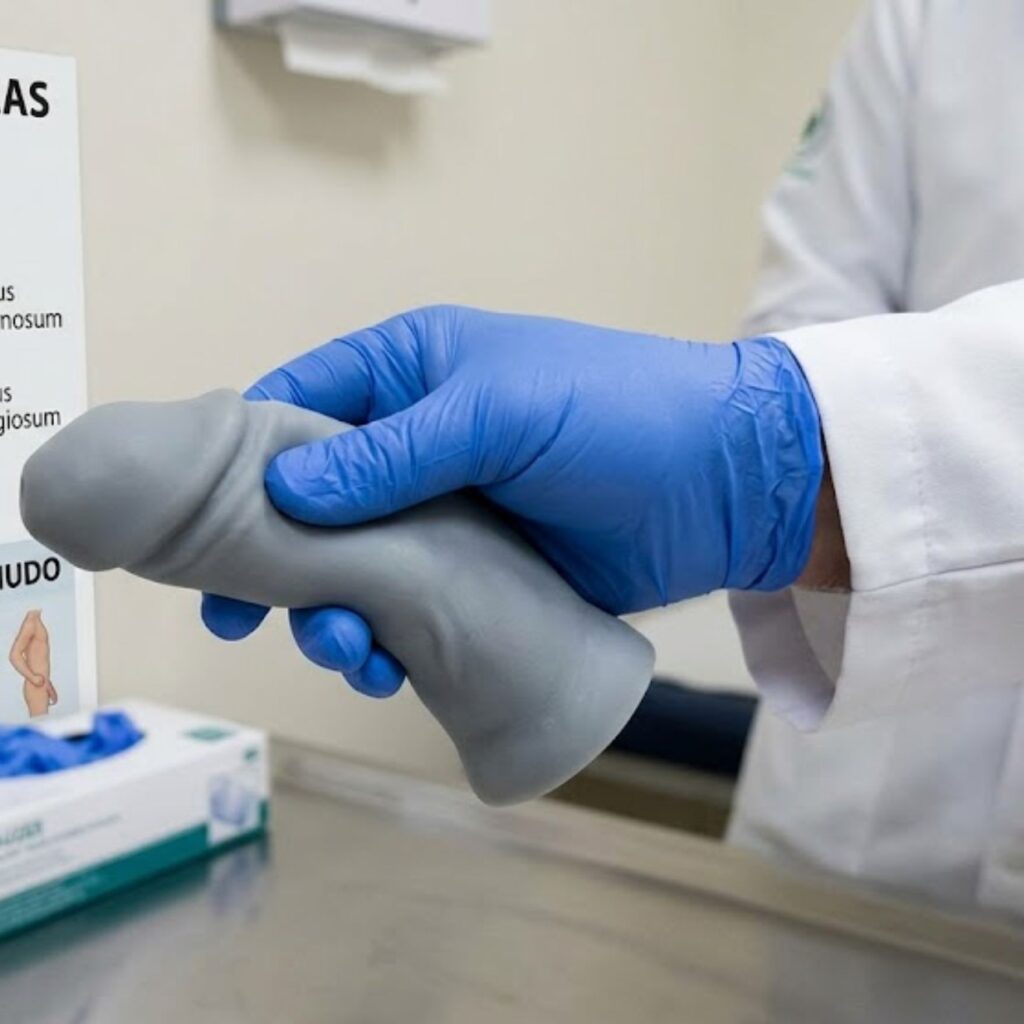
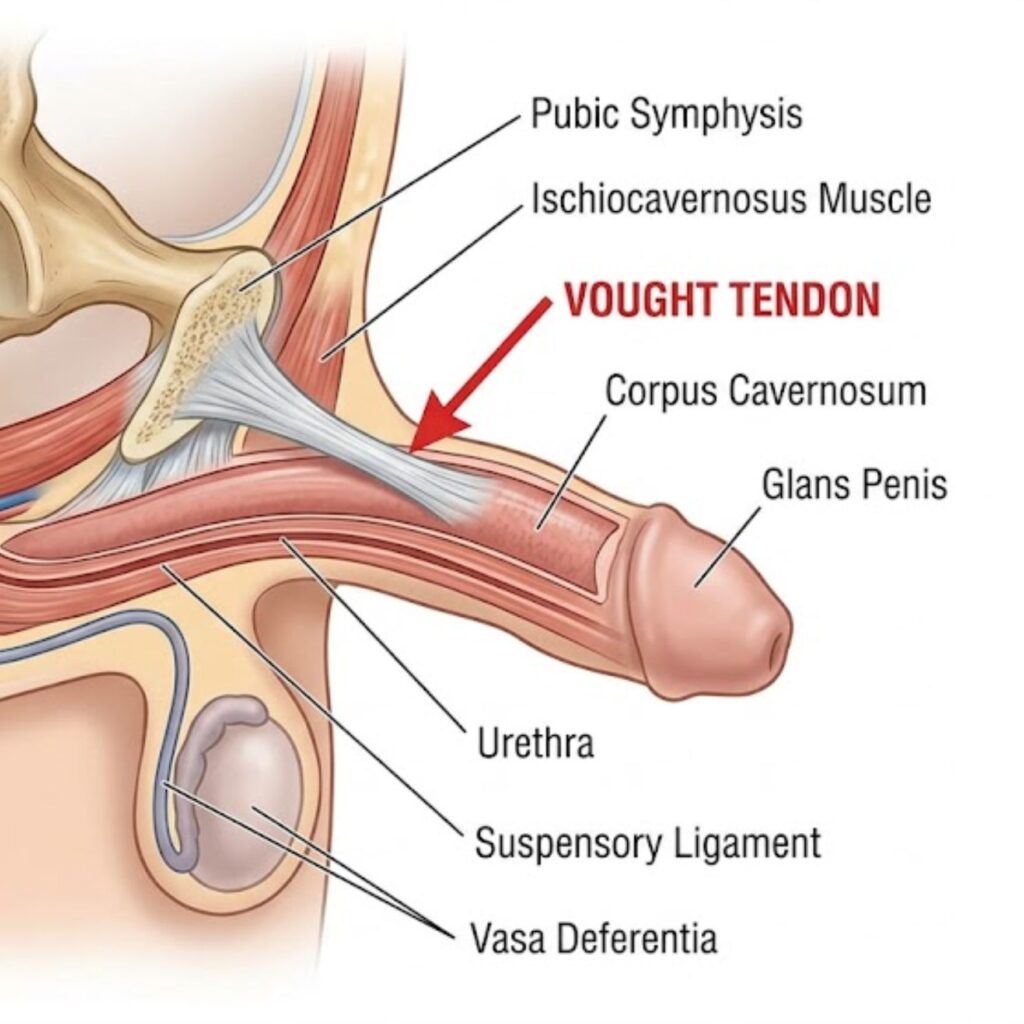
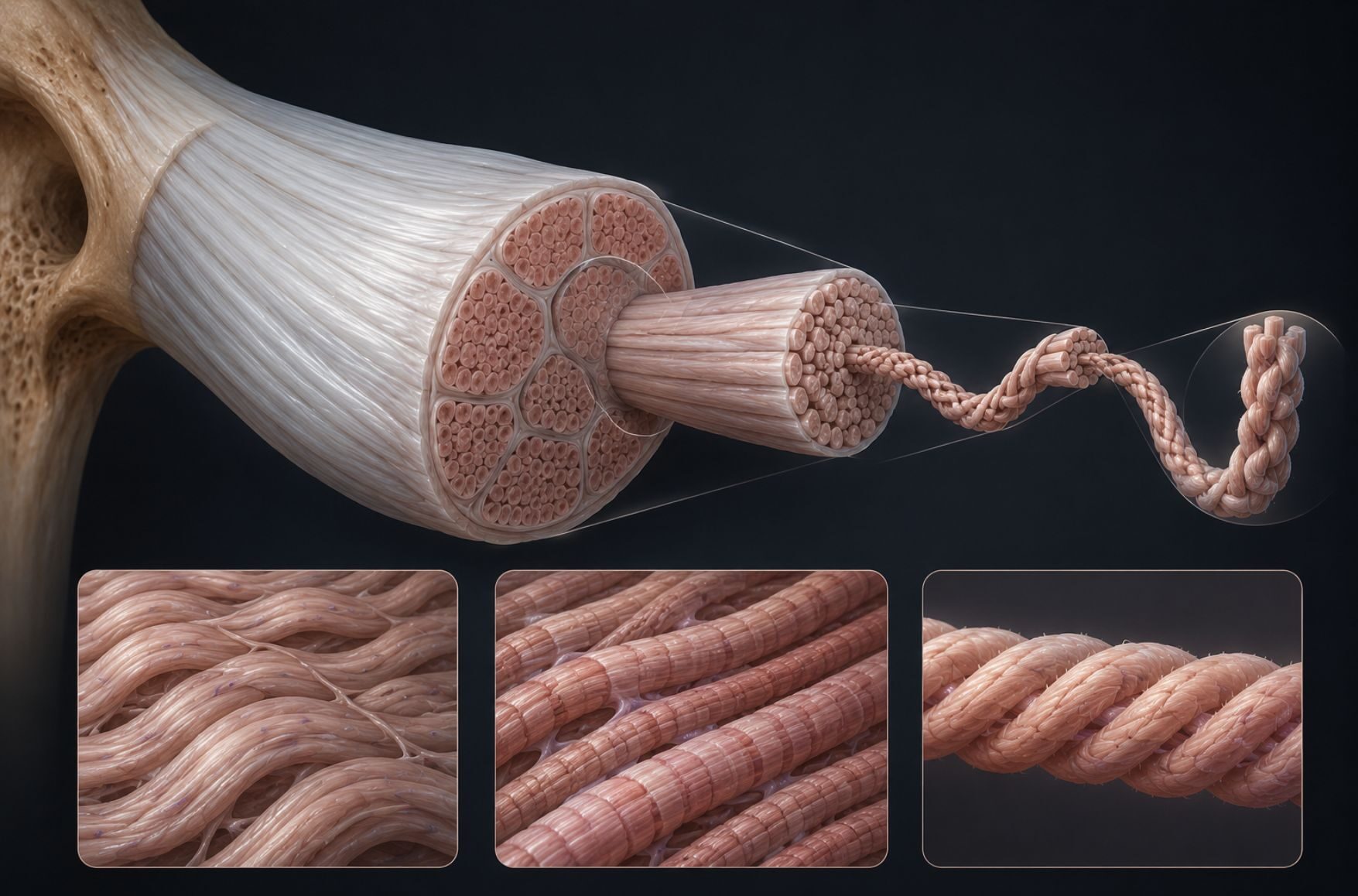
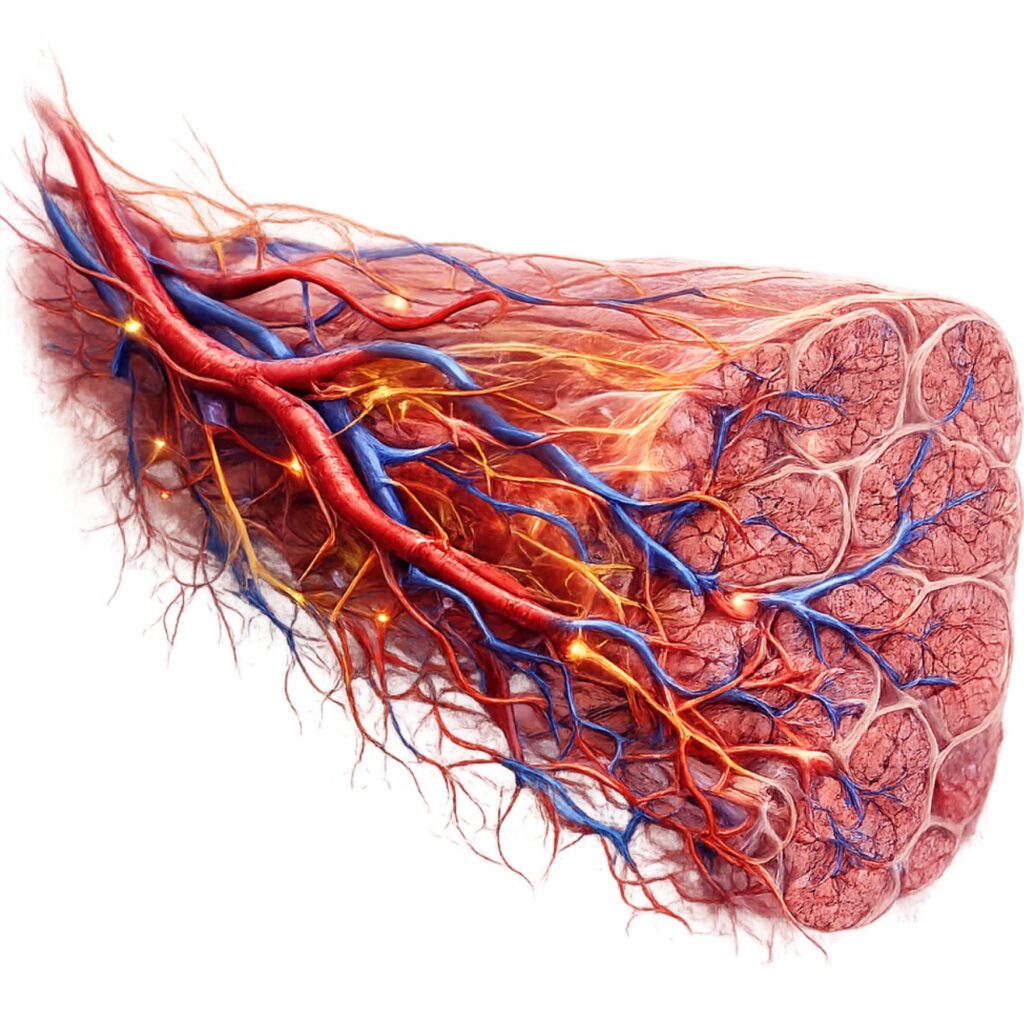
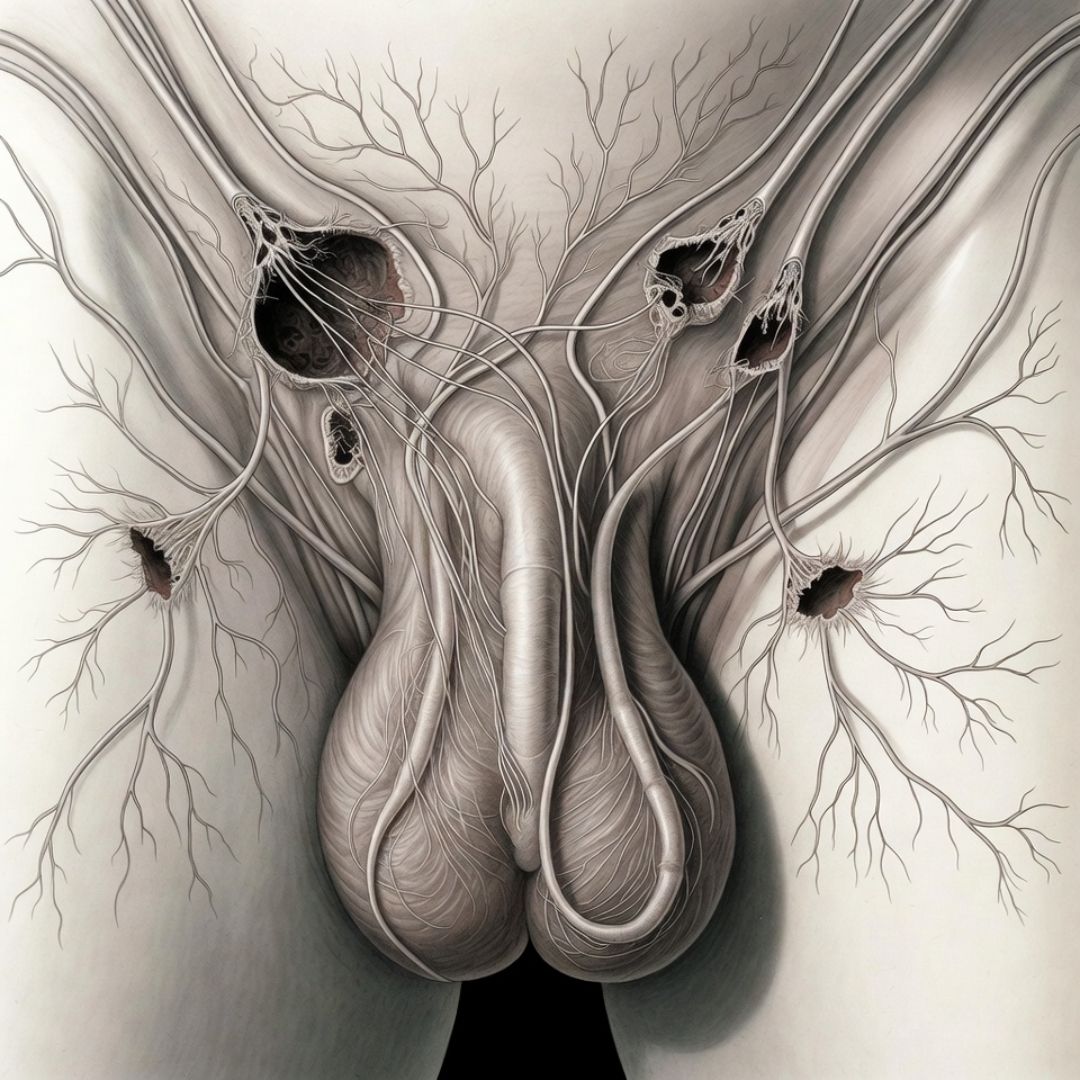
Within this new model, specialists began referring to this structure as the Vought Tendon: a gelatinous fiber rich in collagen, elastin, and proteoglycans, responsible for helping support, retention, and stability of the male organ.
In other words: the penis does not function only as a compartment that receives blood.
It functions as a complex biological structure.
And when that structure begins to age, no pill can rebuild it on its own.
Almost no man notices the change all at once.
There is no alarm.
There is no dramatic moment.
There is only a strange sensation that starts small.
Maybe the erection takes a little longer.
Maybe the firmness is no longer as intense.
Maybe the organ seems less full.
Maybe that loss of pressure happens in the middle of intercourse.
At first, the man rationalizes it.
Fatigue.
Stress.
Anxiety.
Alcohol.
A bad night.
But then it happens again.
And then one more time.
Until he begins to notice something that bothers him deeply: it does not seem like just a momentary failure.
It feels like a physical change.
At this point, many men begin observing their own bodies in silence.
In the shower.
In the mirror.
When waking up.
Before sleeping.
They notice that the organ seems different even outside a sexual context.
More retracted.
More withered.
Less dense.
Sometimes the glans seems less bright.
Less irrigated.
Less alive.
And although almost nobody talks about it publicly, thousands of men describe the exact same intimate perception:
“It feels like it aged too fast.”
That sentence matters.
Because it shows that the man does not feel only a loss of performance.
He feels a loss of integrity.
That is exactly what makes the structural narrative so powerful.
It explains something many men already felt but could not put into words.
The problem would not be only difficulty with erections.
It would be gradual deterioration of male support.
And when that support changes, the entire intimate experience changes with it.
The man starts anticipating failures.
He starts watching his own performance too closely.
He starts losing spontaneity.
And the more anxiety appears, the worse everything seems to become.
But there is an important detail: anxiety can worsen the picture.
However, anxiety alone does not explain why so many men describe the exact same physical sensation of loss of firmness.
That is what led specialists to investigate a different hypothesis: that the tissue responsible for male support was silently aging.
And that is exactly where traditional treatments begin to show their limits.
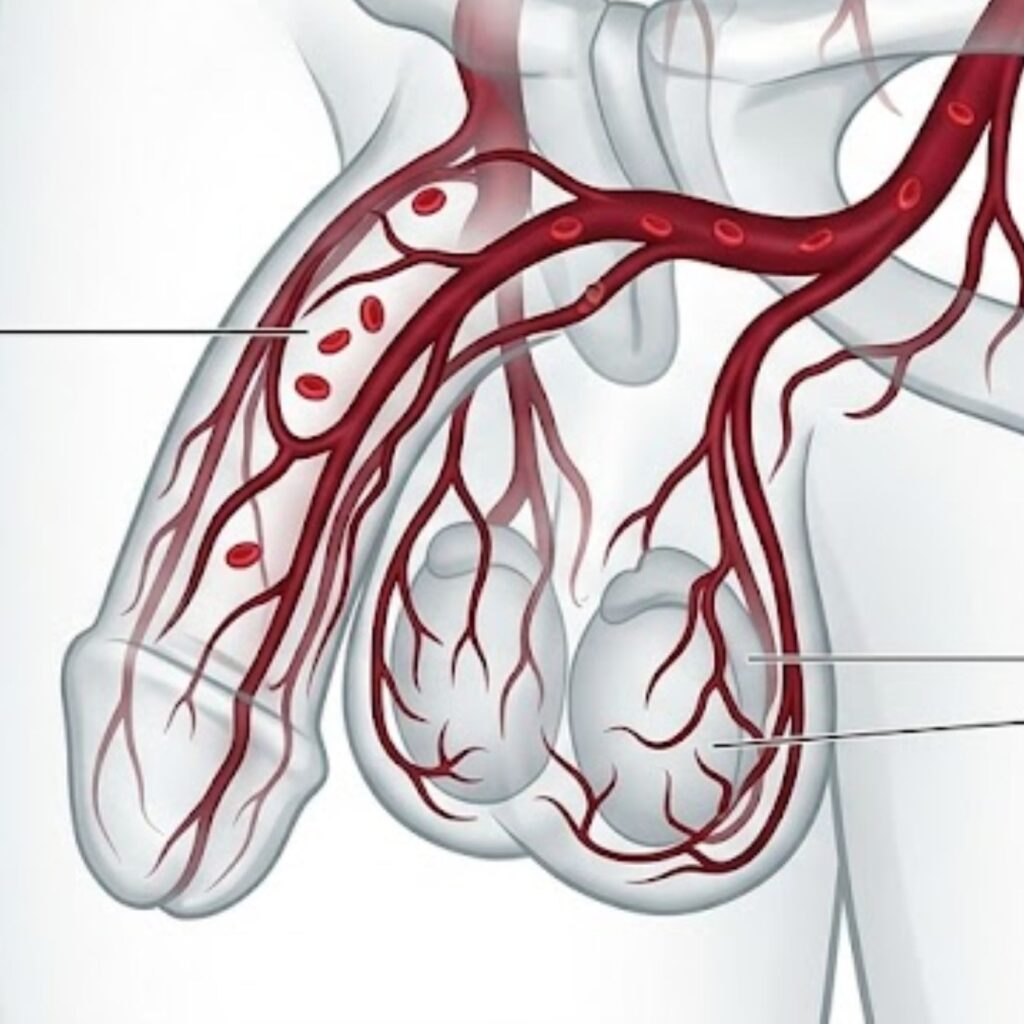
The traditional explanation of an erection is simple: blood enters, the penis hardens, and intercourse happens.
This explanation is not wrong.
It is simply incomplete.
Imagine an old hose.
You can increase the water pressure as much as you want.
But if the structure of the hose has lost elasticity, if it is loose, cracked, or unable to hold pressure, the problem will not be solved simply by adding more water.
With the male organ, the logic is similar.
Blood is essential.
But it needs a structure capable of expanding, holding pressure, and maintaining firmness.
This structure involves internal tissues, fibers, a support matrix, elasticity, and resistance.
It functions like a kind of biological architecture.
When it is intact, blood enters and finds support.
When it is degraded, blood may still enter, but firmness is not maintained in the same way.
That is why some men say:
“I can start, but I cannot maintain it.”
That sentence is much more important than it seems.
It indicates that the problem may not simply be a lack of initial response.
It may be a failure of retention.
It may be a loss of pressure.
It may be deterioration of the structure responsible for supporting the process.
And that is exactly the point the concept of the Vought Tendon tries to explain.
According to reports that began circulating in European regenerative clinics, a specialist in male structural health named Dr. Adrian Walton spent years observing a strange phenomenon among men over 45.
Many patients arrived at the office saying the exact same things.
“My organ does not feel the same anymore.”
“I lost firmness.”
“It seems smaller.”
“Viagra helps… but it does not solve it.”
At first, the traditional explanation seemed sufficient.
Age.
Circulation.
Hormones.
Anxiety.
But Dr. Vought noticed something that began to trouble him.
Completely different men showed the same physical pattern.
The same tissue behavior.
The same loss of support.
The same instability.
The same sensation described as “too soft.”
That is when he began studying the possibility that the problem was not only in blood flow, but in the structure responsible for supporting that flow.
Within this regenerative model, Dr. Vought began referring to the region as the Vought Tendon.
Not as an isolated tendon in the classic orthopedic sense, but as a fibrous structural matrix responsible for male functional support.
A gelatinous structure rich in collagen, elastin, and proteoglycans.
And the more he studied the clinical pattern of these men, the more one conclusion seemed inevitable: the problem was not just making blood enter.
The problem was that the tissue had lost the ability to sustain firmness.
The Vought Tendon can be understood as a male support structure.
An internal gelatinous fiber that all men have, formed by a combination of dense regular connective tissue, collagen, elastin, and proteoglycans.
Its function, within this mechanism, is to act as a support base.
It helps the organ maintain shape, resistance, and stability during an erection.
It is not just an isolated piece.
It is part of a structural matrix that works together with vessels, smooth muscles, cavernous tissue, and blood-retention mechanisms.
In a young man, this structure responds easily.
It is elastic, resistant, and well hydrated.
It allows expansion.
It allows pressure.
It allows support.
But as the years pass, this fiber begins to wear down.
Age advances.
Circulation worsens.
Smoking damages vessels and tissues.
Diabetes changes fiber quality.
Sedentary habits reduce vascular stimulation.
Silent inflammation affects microcirculation.
And little by little, the structure loses its original capacity.
The Vought Tendon stops behaving like firm support and starts behaving like a loose, tired, disorganized fiber.
That is where the so-called “rubber effect” begins.
The name is uncomfortable because it is visual.
And precisely because it is visual, it is powerful.
The rubber effect describes the moment when a man notices that the organ has lost internal resistance.
It may still increase in volume.
It may still respond partially.
But it does not have the same structural firmness.
It is like an old piece of rubber.
It still exists.
It still stretches.
It still moves.
But it no longer returns to its ideal shape.
It no longer offers resistance.
It no longer transmits strength.
In the male body, this may appear as:
A man does not need a sophisticated exam to notice that something has changed.
He feels it.
And that sensation is often devastating because it touches a part of masculine identity that is almost never discussed openly.
For many men, firmness does not represent only sex.
It represents youth, virility, control, presence, and security.
When that begins to fail, the change does not happen only in the body.
It happens in the mind.
The man starts observing himself.
Then he starts pressuring himself.
Then he starts avoiding.
And when he realizes it, intimacy has stopped being a moment of pleasure and has become a test.
The first failure creates doubt.
The second creates fear.
The third creates anticipation.
From that point on, even before any intimate contact, the man is already trapped inside his own thoughts.
“Will it work today?”
“What if it happens again?”
“What if she notices?”
This mental state makes everything worse.
But it is important to understand that it does not appear out of nowhere.
Often, anxiety is a consequence of a real physical perception: the man feels that the organ no longer responds as it did before.
And when he seeks help, he almost always receives the same alternatives.
A pill.
A higher dose.
A supplement.
Generic advice about stress.
The problem is that if the central mechanism is structural wear of the Vought Tendon, these alternatives do not reach the root.
They may mask it for a few hours.
But they do not rebuild the fiber.
They do not reorganize local collagen.
They do not restore elastin.
They do not strengthen the support matrix.
That is why so many men enter a cycle of dependency: the more the tissue loses integrity, the more they depend on external stimuli to try to compensate for a structure that no longer functions fully.
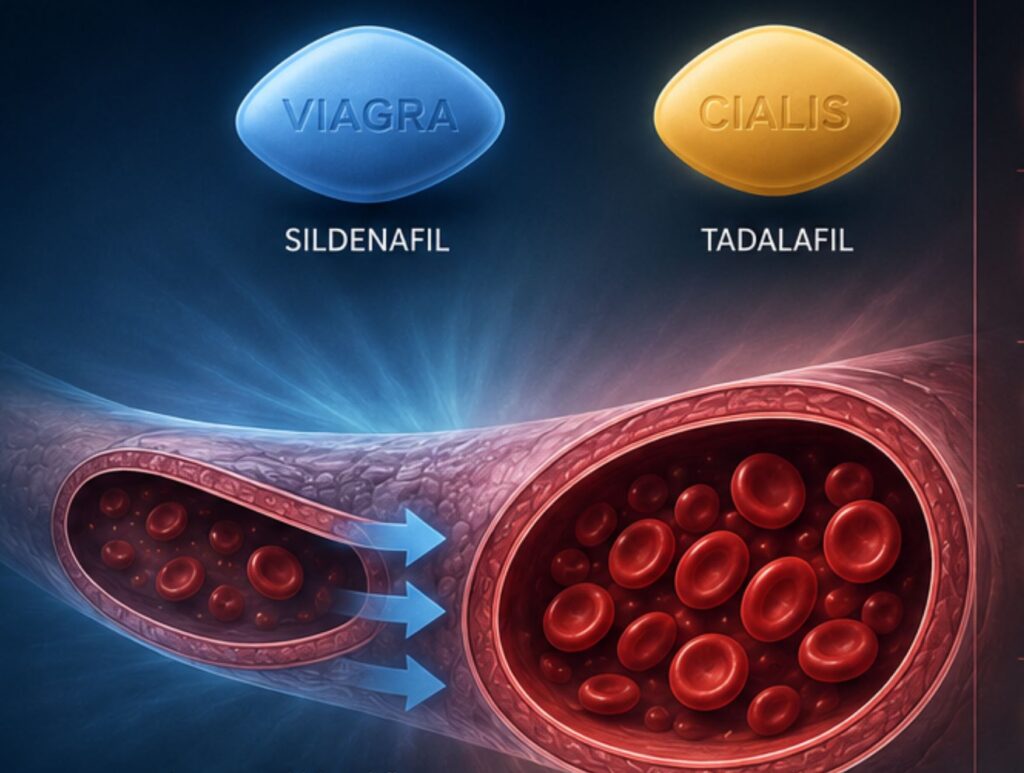
Viagra, tadalafil, and other medications of the same type became famous because they truly changed the lives of many men.
They act on pathways related to vasodilation and nitric oxide.
In simple terms, they help favor blood entry into the organ.
That is why they work well when the main problem is vascular, or when the tissue still has adequate support capacity.
But there is one question almost nobody asks:
What happens when blood enters, but the structure can no longer hold it?
That is where frustration begins.
The man takes the pill.
He feels some effect.
He may even get an initial erection.
But it is not solid.
It is not reliable.
It does not have the same pressure.
Sometimes it disappears halfway through.
Sometimes it requires constant stimulation.
Sometimes it does not transmit that feeling of complete firmness.
And then he concludes: “Even this is no longer working.”
But maybe the pill did not fail.
Maybe it is trying to solve the wrong part of the problem.
Because vasodilation is not the same as regeneration.
Increasing flow is not the same as restoring structure.
Forcing a chemical response is not the same as rebuilding biological support.
That is the difference between treating the symptom and treating the mechanism.
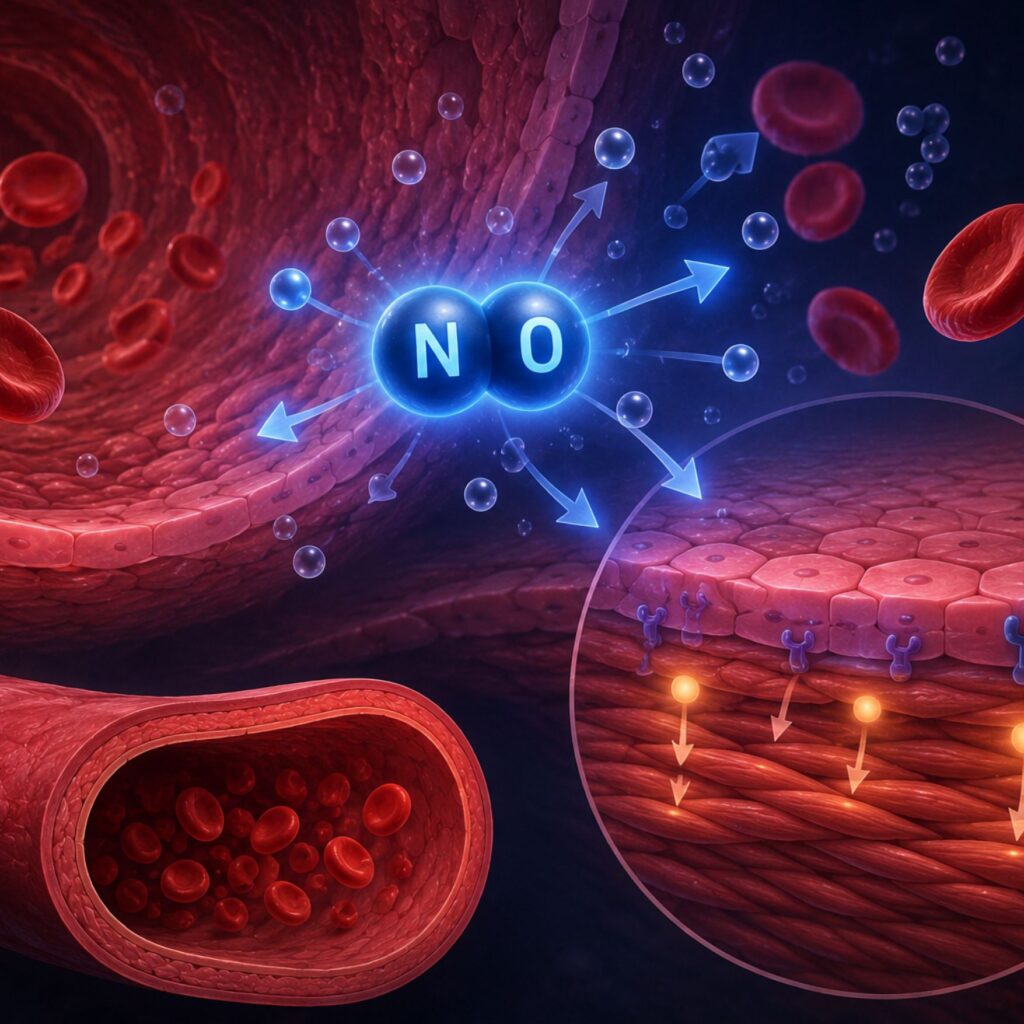
Nitric oxide is one of the best-known names when the subject is erection.
Even men who have never studied the topic have heard of it in ads, supplements, or explanations about vasodilation.
And this matters, because nitric oxide really does participate in the erection process.
It helps relax tissues, dilate vessels, and favor blood flow.
But within this new approach, nitric oxide is not seen only as a molecule for provoking a momentary erection.
It begins to be seen as part of a local regenerative-stimulation process.
The difference is simple: the pill acts from the outside in, through the oral route, trying to generate a temporary effect in the system.
The regenerative device acts directly in the region, using controlled heating to stimulate the tissue itself to release local signals, support circulation, activate cellular response, and begin a gradual process of structural recovery.
This difference changes the entire logic of treatment.
Instead of depending on a pill before intercourse, the objective becomes to re-educate and restore the tissue over weeks.
It is a rebuilding approach, not an emergency approach.
Tendons and support structures are formed mainly by connective tissue.
And connective tissue depends on fibers.
Among these fibers, collagen and elastin play a fundamental role.
Collagen provides resistance.
Elastin provides flexibility.
Proteoglycans help with hydration, organization, and matrix quality.
When these structures are healthy, the tissue behaves in a firm and elastic way.
When they are degraded, the tissue loses mechanical quality.
That is why the solution proposed within this mechanism is not simply “increase desire” or “put in more blood.”
The solution would be to rebuild the quality of the structural matrix.
In other words: stimulate new collagen.
Improve elastin.
Support vascularization.
Gradually restore the behavior of the support fiber.
This process is known as neocollagenesis.
And it is the basis of the regenerative promise.
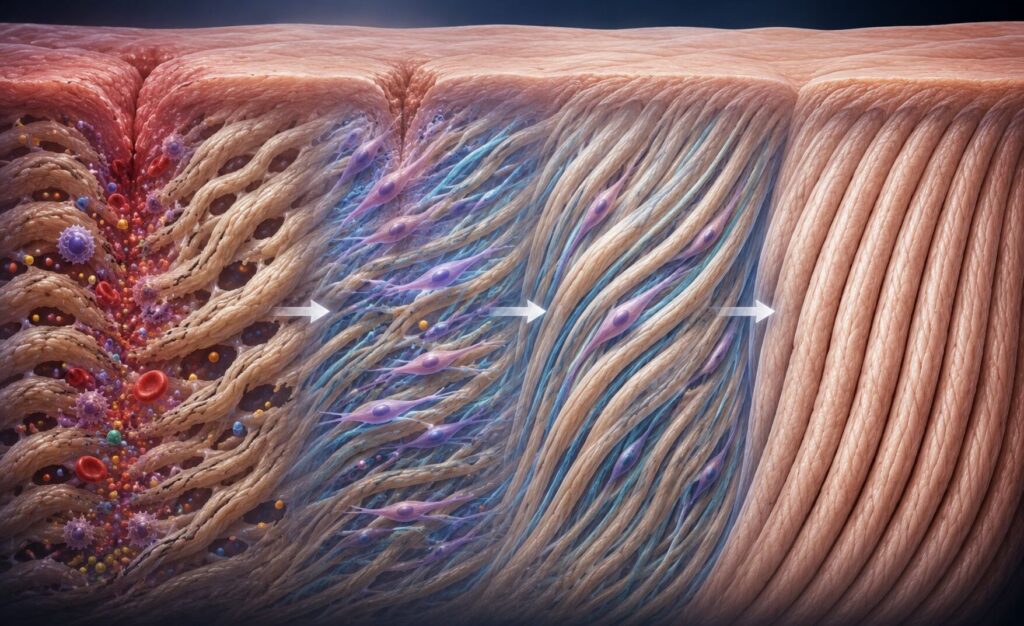
Neocollagenesis means the formation of new collagen.
In practice, it is the process through which the body reorganizes and renews structural fibers after receiving an appropriate stimulus.
This concept is already known in different areas.
Aesthetic treatments use thermal stimulation to improve skin firmness.
Regenerative therapies use controlled stimuli to support tissue repair.
Physical therapy and sports medicine have also worked for years with the idea of stimulating specific tissues to accelerate recovery.
The male application follows similar logic.
If the Vought Tendon is a structure rich in collagen, elastin, and connective matrix, then the most coherent path would not be only to force a temporary erection.
It would be to stimulate the tissue so it begins a repair process.
This repair would involve local activation, increased circulation, nitric oxide release, fibroblast stimulation, formation of new collagen, fiber reorganization, improved elasticity, and stronger support.
That is the heart of the mechanism.
And it is also the point where the proposal differs from everything the man has usually tried before.
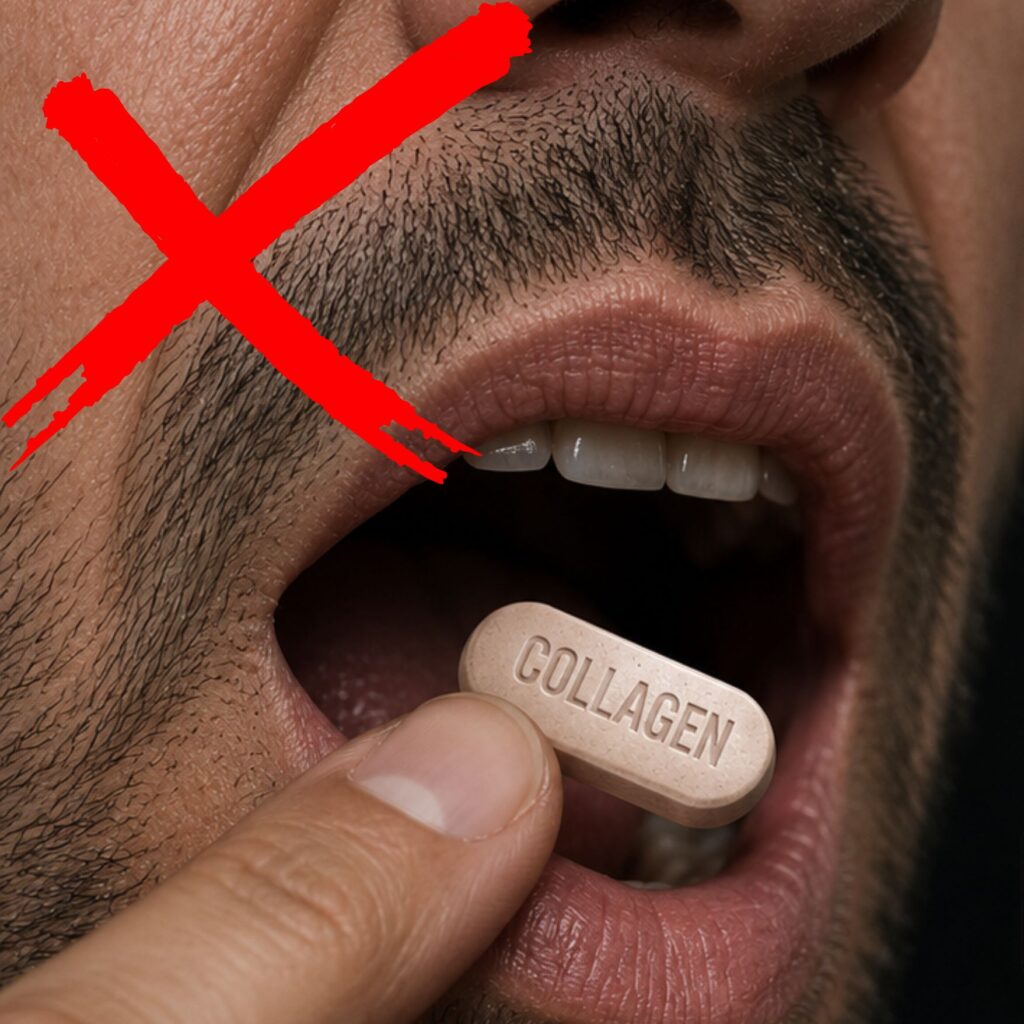
When a man understands that the problem involves collagen, the first idea may seem obvious: “Then I just need to take collagen.”
But it is not that simple.
Most collagens sold on the market are positioned for skin, hair, nails, and aesthetics.
Even when they help the body in some way, that does not mean they will specifically rebuild the penile support structure.
The body does not function like a direct delivery system in which a capsule decides to go exactly to the Vought Tendon.
In addition, the problem is not just a lack of raw material.
It is lack of local stimulus.
It is tissue organization.
It is vascular response.
It is regenerative signaling.
That is why the sentence becomes so strong:
The collagen that makes the face look younger can still leave the penis withered.
Because the issue is not just consuming collagen.
It is forcing the right tissue to react.
And this is where controlled heating enters.
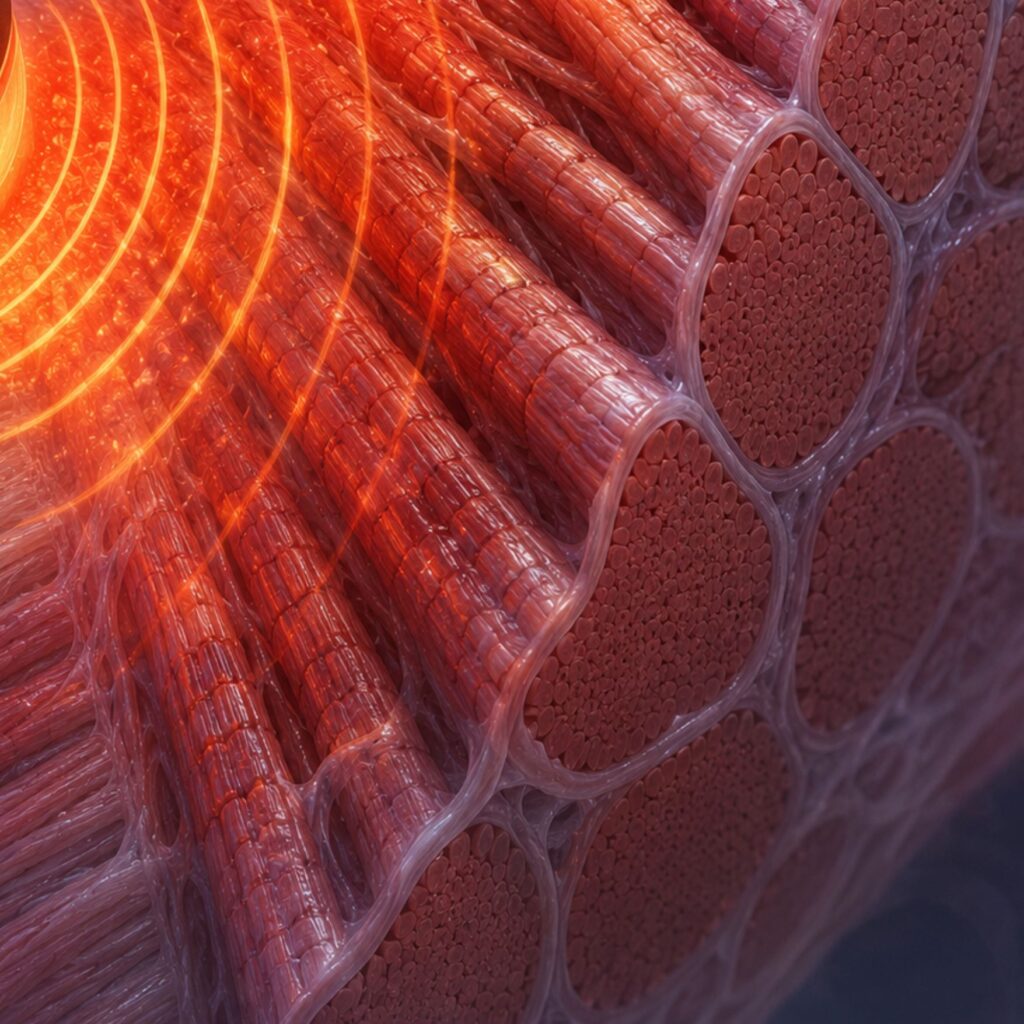
The proposed regenerative technology uses low-intensity electromagnetic waves to generate controlled tissue heating.
This heating should not be understood as aggressive heat, pain, or burning.
The idea is exactly the opposite.
It is a calibrated, comfortable, targeted thermal stimulus capable of provoking a biological response in the region.
The tissue receives this stimulus and interprets it as an activation signal.
From there, a sequence occurs: electromagnetic waves → controlled heating → stimulation of the tissue matrix → local nitric oxide release → improved microcirculation → neocollagenesis → neurovascularization → progressive restoration of support.
This chain is what separates the regenerative approach from the medication approach.
Medication tries to create an immediate effect.
Regenerative stimulation tries to rebuild the natural capacity of the tissue.
Male firmness does not depend only on collagen.
It also depends on vessels, nerves, and local communication.
That is why neurovascularization enters as another important element of the mechanism.
The term describes the development or improvement of the relationship between vascular supply and local neurological response.
In simple language: the tissue needs to receive blood, respond to stimulus, and maintain efficient communication with the system that controls erection.
When the region is aged, under-stimulated, or has deficient microcirculation, this response may be impaired.
Controlled heating seeks to reignite this environment — not only to provoke an isolated erection, but to improve the functional quality of the region throughout a protocol.
That is why the treatment is not presented as an instant-effect pill.
It is presented as a structural reactivation protocol.
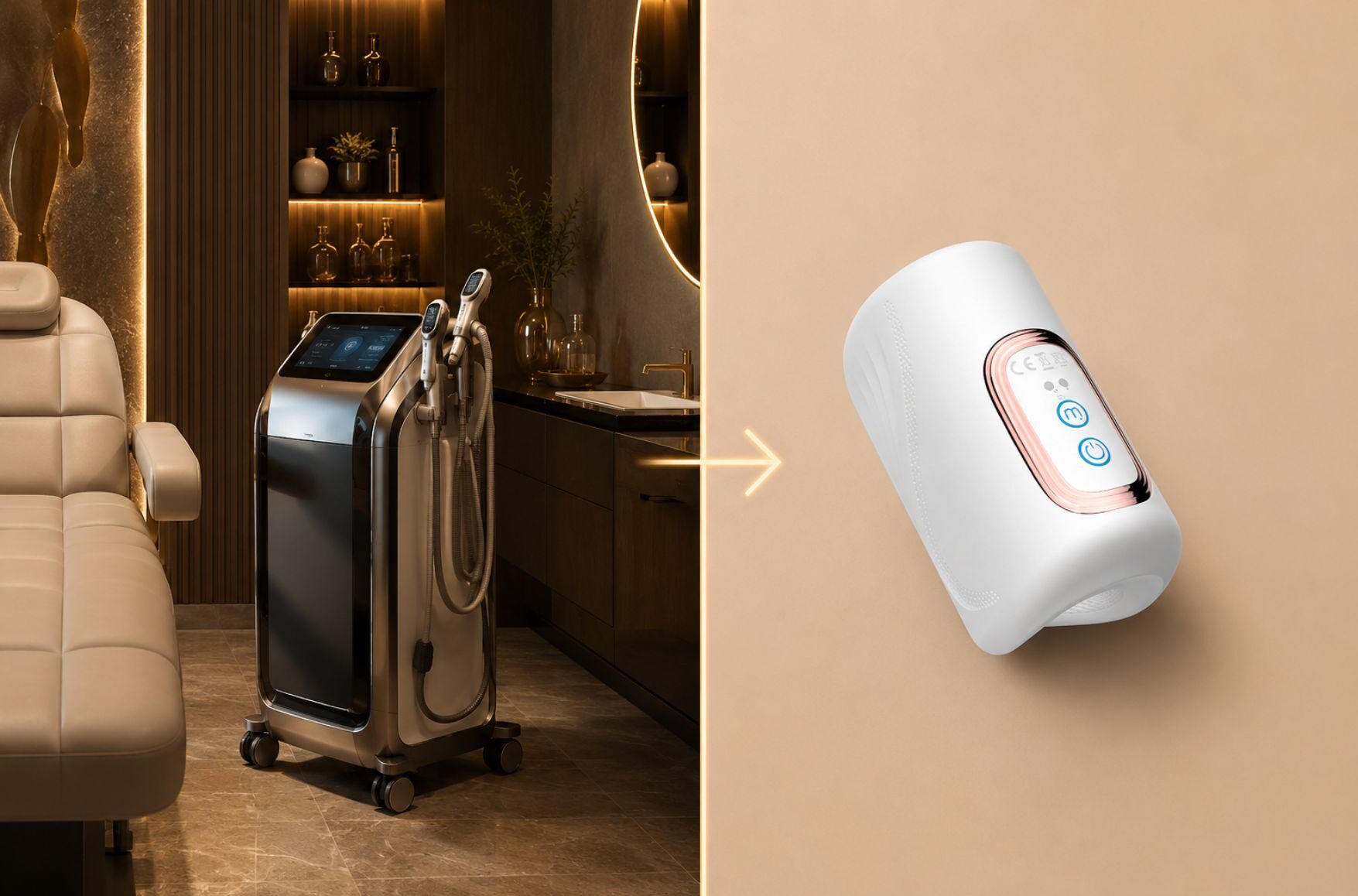
For a long time, these regenerative technologies remained practically invisible to the ordinary man.
Not because they did not work.
But because there was an extremely profitable model behind them.
Private clinics began using regenerative radiofrequency protocols to stimulate male tissue through controlled heating.
The results began quietly attracting attention.
Men who depended on pills reported gradual improvement in firmness.
Men who already avoided intimacy regained confidence.
Men who described the organ as “withered” reported recovery of density and stability.
But there was a problem.
The treatment was trapped inside clinics.
Each session was expensive.
Each return visit generated another charge.
Each patient had to keep coming back.
And according to people familiar with the sector, many centers had little interest in miniaturizing the technology.
Because as long as the equipment remained exclusive, the patient remained dependent.
That was precisely when Dr. Adrian Vought reportedly decided to break with the traditional model.
According to reports connected to the development of the technology, he joined Spanish biomedical engineers to create a home version of the regenerative protocol.
The objective was simple: turn a technology restricted to clinics into something discreet, accessible, and possible to use at home.
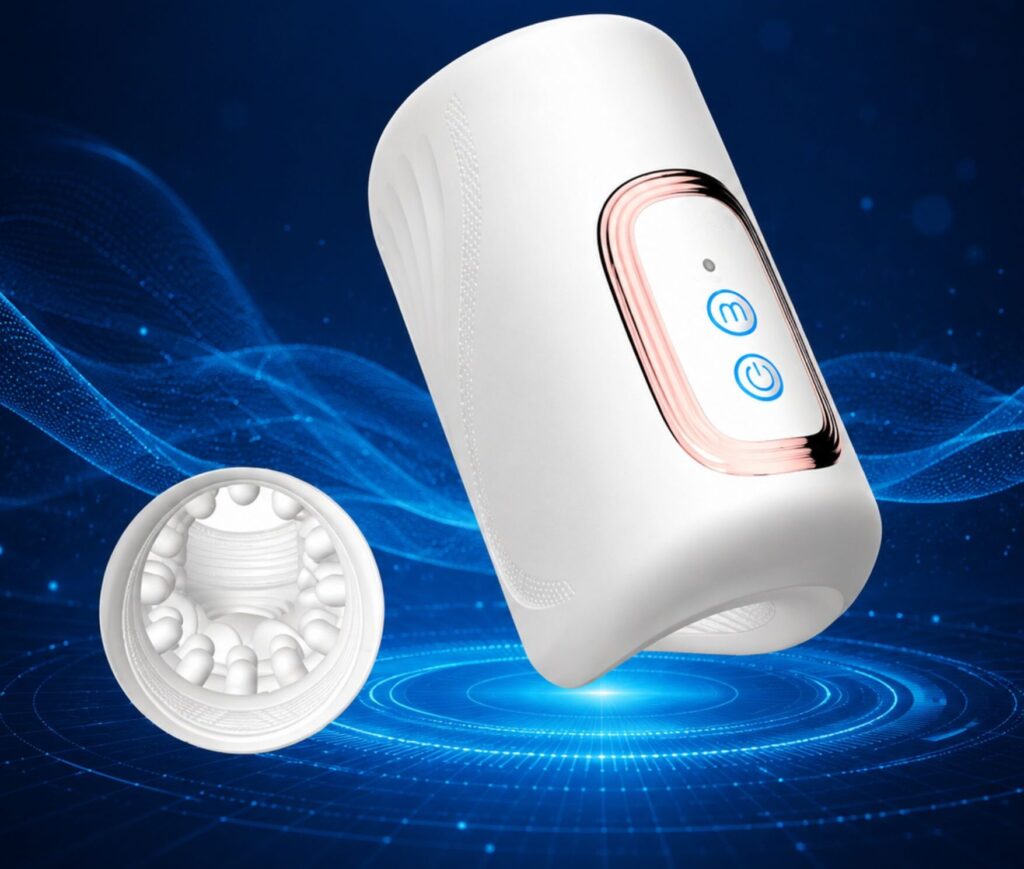
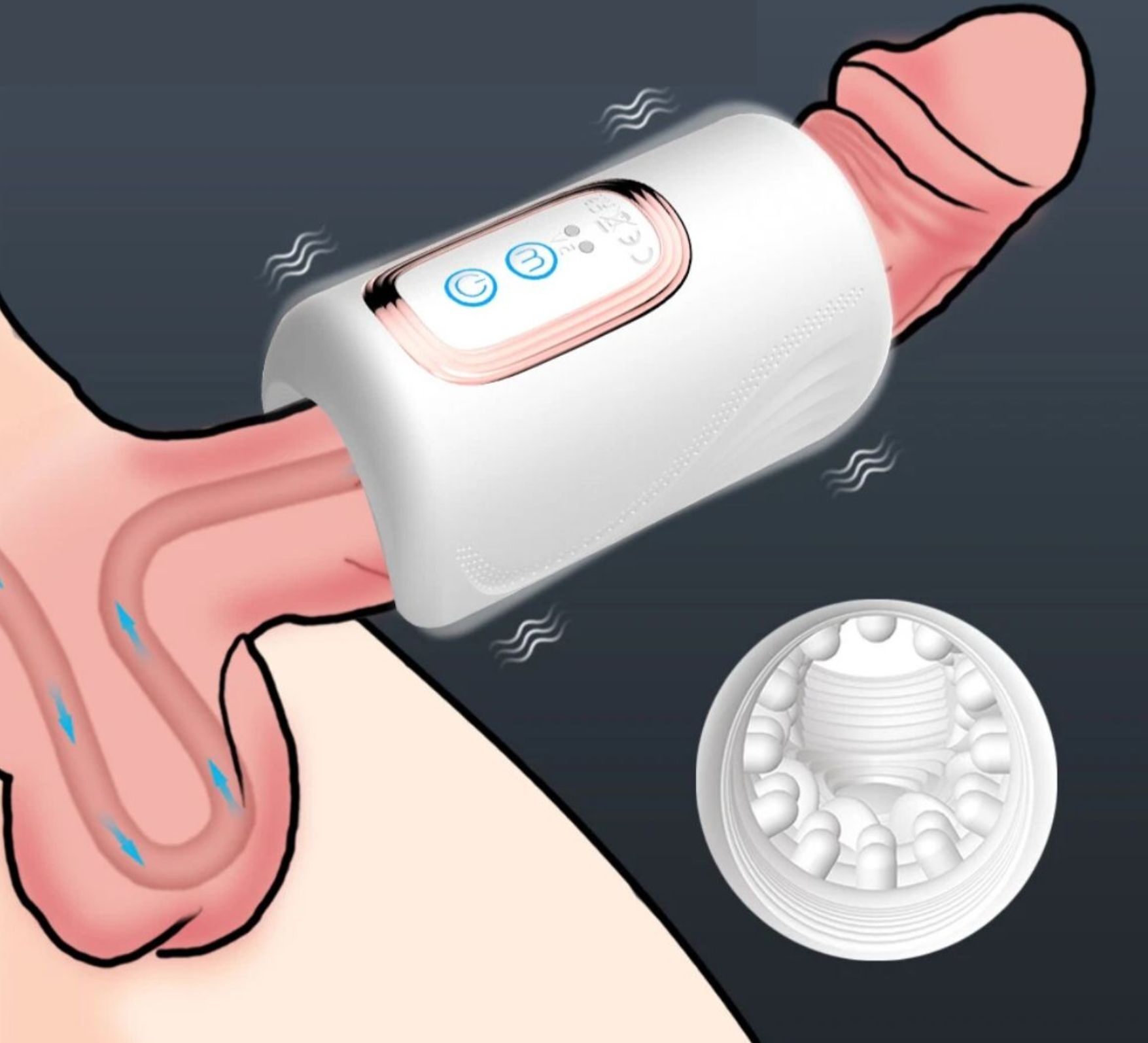
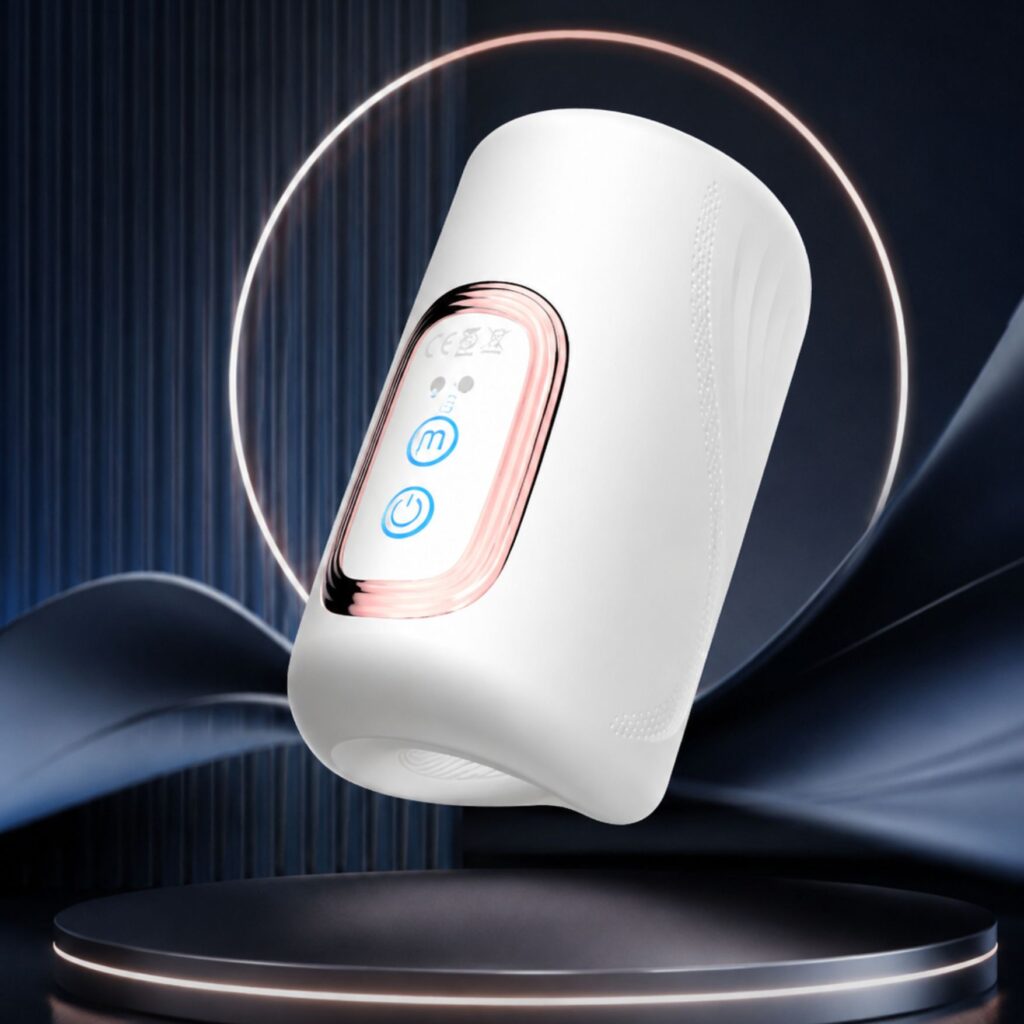
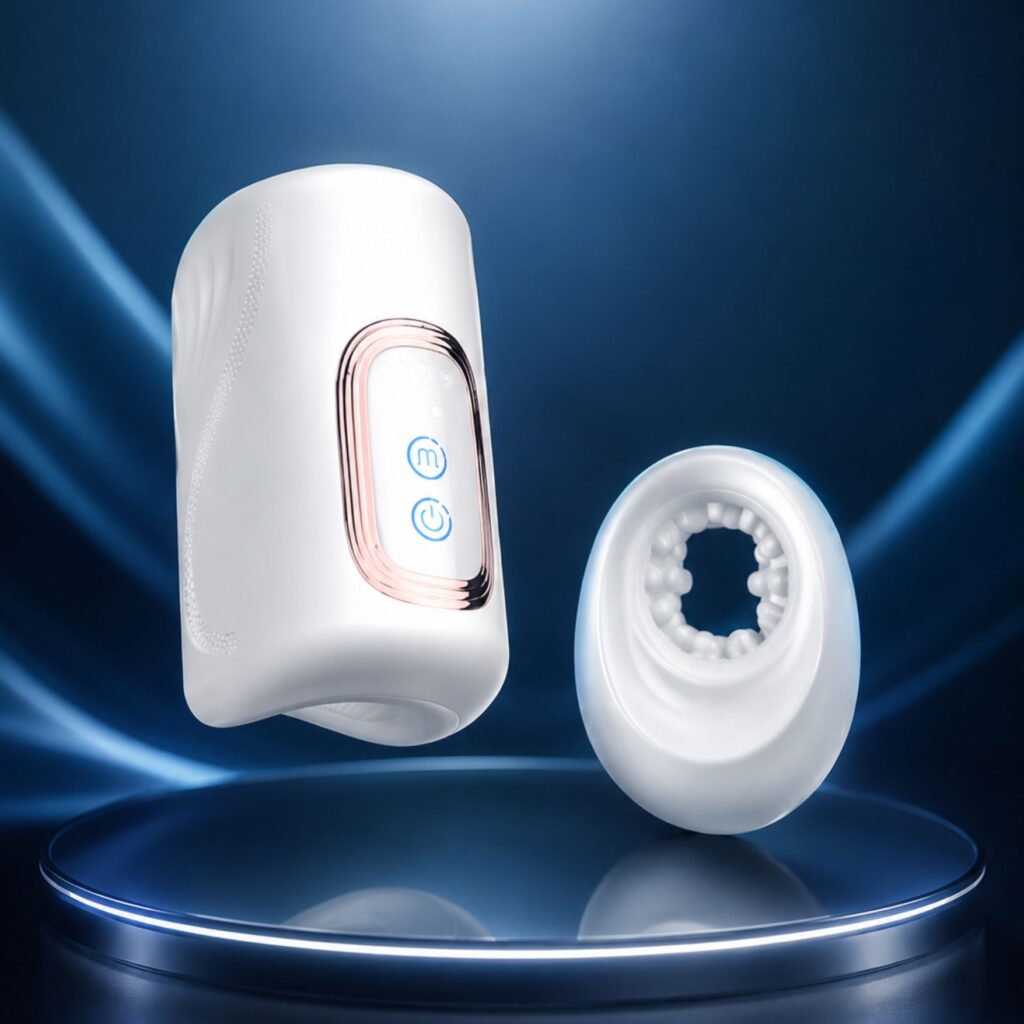
After years of development, the device known as Cavernix appeared.
A portable male structural-restoration system based on controlled tissue heating.
Small.
Discreet.
Silent.
And developed specifically for men who want to restore firmness without depending on pills or invasive procedures.
For years, similar regenerative technologies remained restricted to specialized clinics.
And that created a problem.
The man had to schedule an appointment, face embarrassment, pay for recurring sessions, and return to the office several times.
For some, this was possible.
For most, it was expensive, uncomfortable, or simply unviable.
In addition, there is an obvious commercial logic.
For clinics, charging per session is far more profitable than giving the device to the patient.
Each visit generates revenue.
Each return keeps the patient tied to the system.
Each protocol requires travel, scheduling, exposure, and cost.
That is why, for a long time, the technology remained distant from the ordinary man.
Not because it was impossible to simplify.
But because the clinic model was too profitable.
Only when a Spanish technology company decided to miniaturize the system did this logic begin to change.
The breakthrough came when engineers managed to transform controlled-heating technology into a small, discreet device adapted for home use.
The device was designed to reproduce the same principle used in clinics: controlled energy emission, localized thermal stimulation, and protocol monitoring.
The difference is that now the man would not need to travel.
He would not need to expose his intimacy.
He would not need to pay for repeated sessions.
And he would not need to adapt his routine to a clinic.
He could perform the treatment at home, privately, in quick sessions.
This device received the name Cavernix.
The name was chosen precisely because it carries the signature of the structural mechanism developed from Dr. Adrian Vought’s regenerative studies.
Small.
Discreet.
Easy to store.
Easy to use.
And created for men who want an alternative free from pills, free from embarrassment, and focused on restoring male structure.
Use was designed to be simple.
The man accesses the protocol through the app, positions the device according to the guidance, starts the session, and follows the time on his phone.
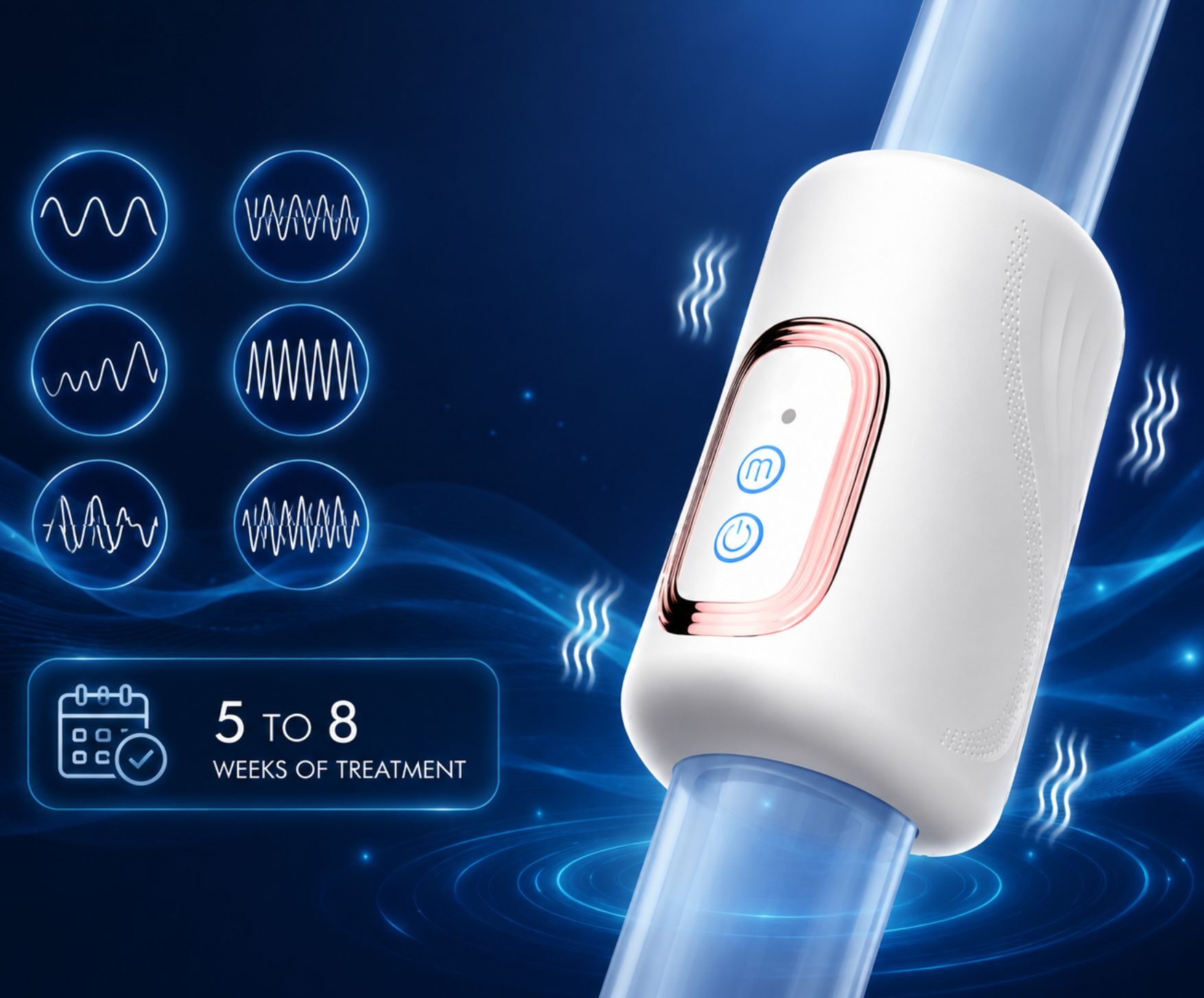
Each session lasts up to 17 minutes.
The device works with controlled heating, keeping the stimulus within a safe and constant range.
During use, the expected sensation is comfortable warmth, not pain.
The goal is not to force the organ.
It is not to provoke an artificial immediate erection.
It is not to create dependency.
The goal is to stimulate the Vought Tendon and the associated structural matrix so that the tissue itself begins a gradual recovery process.
For that reason, the protocol requires consistency.
Just as muscle is not rebuilt in a single workout, male support would not be restored in a single session.
The process needs repetition.
It needs daily stimulation.
It needs weeks.
The initial Cavernix proposal is a 5-week treatment.
This period serves as the activation phase — when the tissue begins receiving repeated stimuli, local circulation is encouraged, and the regenerative process begins to be provoked.
For more expressive results, a minimum of 8 weeks of daily use is recommended.
Short sessions.
Up to 17 minutes.
Monitored by the app.
Done at home.
No need for a clinic.
No exposure.
No oral medications.
The logic is simple: the greater the consistency, the greater the chance that the tissue will respond to the stimulus.
The app functions as a guide.
It helps the user maintain discipline, track sessions, and follow the protocol without relying on memory or improvisation.
This makes the treatment easier to fit into the routine.
In the morning.
At night.
Before a shower.
In a private moment.
Without turning intimate life into a public problem.
Few topics create as much silence as erectile dysfunction.
A man can talk about back pain, high blood pressure, work, money, football, or politics.
But when the subject involves loss of firmness, he almost always shuts down.
This happens because the problem touches a deep part of male identity.
He does not want to seem weak.
He does not want to be seen as old.
He does not want to be judged.
He does not want to explain to an attendant, a secretary, a doctor, or a partner that he no longer feels the same confidence.
That is why a home device has powerful appeal.
It gives the man back control of the treatment.
It allows him to act without exposing himself.
It allows him to solve in silence the problem he lives in silence.
And this detail can be as important as the mechanism itself.
Because many men do not seek help not because they lack the desire to improve, but because they are ashamed to admit they need help.
When structural wear reaches more severe levels, some men may consider invasive procedures.
Reconstructive surgery appears as an artificial correction alternative.
It seeks to mechanically restore part of the lost support through direct intervention in the tissue.
But it is a frightening option.
It involves cutting.
It involves recovery.
It involves cost.
It involves risk.
And it involves an emotionally difficult period for the man, who must deal with the idea of a deep intimate intervention.
For many, the mere possibility of surgery is enough to look for an alternative before the condition progresses.
That is where Cavernix positions itself: not as a solution for extreme cases that already require medical intervention, but as a non-invasive option for men who want to act before reaching that point.
The message is clear: if the problem is support wear, it makes sense to try to restore the fiber before replacing it artificially.
There is a sentence that appears frequently in male reports:
“I thought it was normal for my age.”
That sentence is dangerous.
Because it turns a treatable problem into a sentence.
The man begins to accept less intimacy.
Less firmness.
Less confidence.
Less initiative.
Less pleasure.
He convinces himself that the phase has passed.
But deep down, he does not accept it.
He simply stays silent.
He keeps researching in secret.
Reads forums.
Compares symptoms.
Looks for supplements.
Tests pills.
Increases the dose.
Avoids talking.
And tries to look calm.
What this new mechanism does is offer a different explanation: it is not the end of masculinity.
It is not a lack of value.
It is not shame.
It is wear of a structure.
And structure can be stimulated.
Originally, the device was sold for 149 dollars.
That amount was already lower than the cost of several cycles of clinical sessions, but it still created obstacles for many men outside the United States.
Currency conversion, international fees, and taxes made access more expensive than it should have been.
For that reason, the company began working with sales in local currency in strategic markets.
In the United Kingdom, partial funding allowed almost half of the cost to be reduced, making Cavernix much more accessible.
As a result, the price dropped to £40 during the active campaign.
The justification is simple: an intimate, dignified, discreet treatment should not be restricted only to those who can afford expensive clinics.
Men of different ages and financial conditions also deserve access to a modern, private, non-invasive solution.
That is the emotional and economic argument behind the offer.
It is not only about selling a device.
It is about democratizing a technology that was previously limited.
Cavernix was created for men who have begun noticing changes such as:
It is not for someone who is only curious.
It is not for someone who wants a miracle promise.
It is for the man who wants a rational, discreet solution focused on structure.
The man who is tired of depending on pills.
The man who feels the problem is not only desire.
The man who knows there is still intimate life ahead, but needs to regain confidence in his own body.
Men do not talk easily about this subject.
But they know when something has changed.
They know when firmness is no longer the same.
They know when confidence has disappeared.
They know when intercourse has stopped being spontaneous.
They know when they have begun avoiding the moment they once desired.
And they also know when they are tired of solutions that only mask the problem.
Rubbery Penis Syndrome is a direct way to name this loss of support.
The Vought Tendon is the mechanism that explains the structural root.
Neocollagenesis and neurovascularization are the regenerative path.
Controlled heating is the stimulus.
And Cavernix is the tool that makes this process accessible at home.
Availability may vary according to stock, region, and continuation of the incentive.
For that reason, men who want to start the protocol should access the official website, check eligibility, and follow the instructions on the page.
It is not only about having firmer erections again.
It is about recovering the sensation that the body still responds.
It is about giving back to the man the confidence he lost in silence.
It is about leaving the cycle of shame, pills, and excuses.
And seeing male intimate health again as something that can be treated with technology, discretion, and logic.
The man who acts today is not just buying a device.
He is choosing to stop accepting less than he deserves.
Because when structure becomes the priority again, the conversation stops being about failure.
It becomes about restoration.
To learn more about Cavernix, confirm whether the special condition is still available, and begin the home structural-restoration protocol, simply tap the button on the official website.
You will be directed to the secure page, where you can check the current price, availability in your country, and instructions for use.
If you have reached this point, you have probably already understood the main point:
It is not just about circulation.
It is not just about age.
It is not just about testosterone.
And it is not just about taking another pill.
The root may be in support.
And support can be restored.
Congratulations on your choice.
This is the first article I’ve read that actually describes the problem properly. It was never just “not enough blood flow” for me. The firmness was different, almost like the support had weakened.
The part about still having desire but losing stability is exactly what nobody understands. You can want intimacy and still feel your body is not responding the same way anymore.
I’ve tried pills before and they helped for a while, but the effect became less reliable over time. This explanation about structure versus temporary stimulation makes a lot of sense.
The “old hose” comparison was uncomfortable to read, but it explained the issue better than any doctor ever did. Blood flow is only part of the story.
That is exactly the distinction the article is making: circulation matters, but firmness also depends on the tissue’s ability to maintain support.
I appreciated that this didn’t read like another testosterone ad. I had normal labs, normal desire, and still knew something had changed physically.
Privacy is a big part of this. Most men don’t want to sit in a clinic waiting room for this kind of problem. A discreet home option is much easier to consider.
The phrase “rebuilding instead of compensating” is what stood out to me. That is exactly what I’ve been looking for — something that doesn’t just create pressure for one night.
I don’t usually trust advertorials, but this one described symptoms I’ve never seen written so clearly. Especially the part about needing constant stimulation to maintain firmness.
Reader Comments